
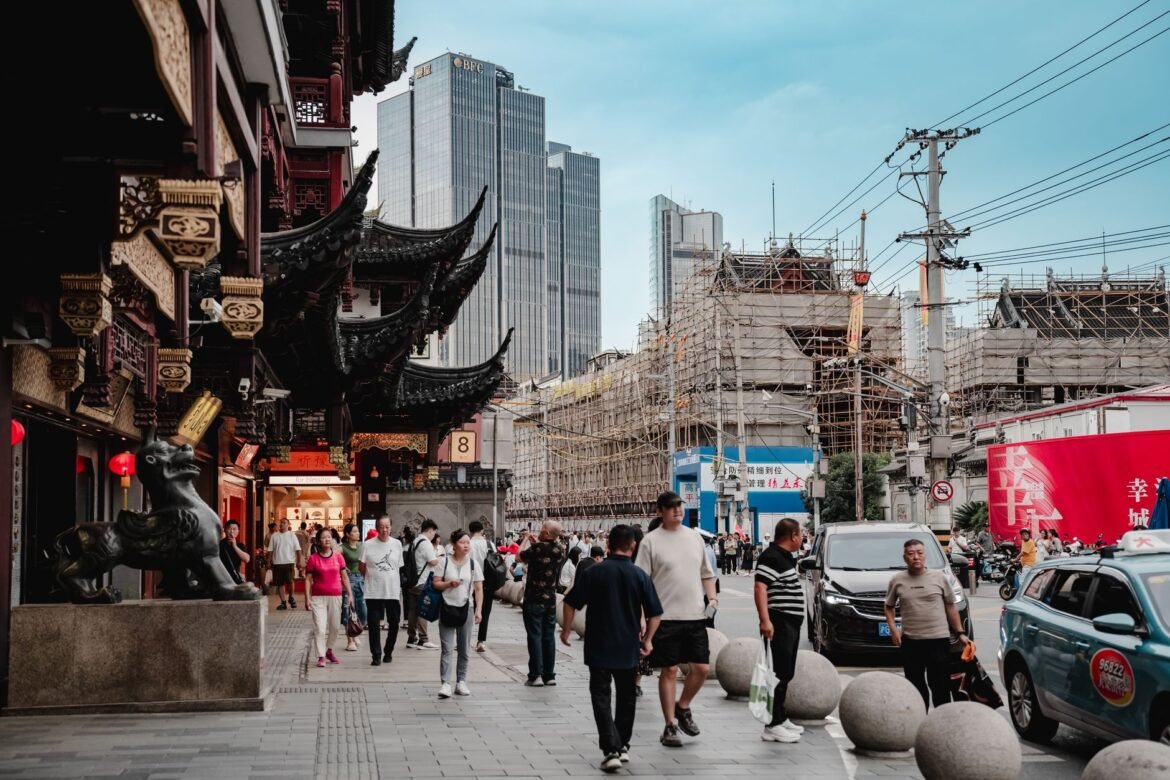
China economy August 2026 reveals a slowdown in retail sales, which have dropped to just 0.4%. Meanwhile, hi-tech fixed asset investment continues to grow at 5.2%.
Overview of China’s Economic Performance
In August 2026, the China economy faced significant challenges, particularly in the retail sector. Retail sales growth slowed dramatically to just 0.4%, raising concerns among analysts and investors about the overall health of the consumer market. This sluggish performance marks a notable decline compared to previous years, leading many to speculate whether this could be the worst period for retail sales in recent history.
Despite the downturn in retail, there were some positive indicators within the broader economic context. Hi-tech fixed asset investment (FAI) showcased resilience, growing by 5.2% during the same period. This growth highlights a shift in focus towards technology and innovation, suggesting that while consumer spending may be faltering, investment in high-tech industries remains robust.
Economists are divided on the implications of these trends. Some argue that the stagnation in retail sales reflects deeper issues within the economy, including reduced consumer confidence and urban employment challenges. Others believe that the growth in hi-tech FAI could pave the way for future recovery, indicating a potential transformation in the economic landscape.
As the China economy August 2026 continues to develop, stakeholders will closely monitor these contrasting indicators to assess the future trajectory of the nation’s economic performance.
Retail Sales Trends in August 2026
In August 2026, the China economy faced significant challenges, particularly in the retail sales sector. According to recent reports, retail sales growth slowed to a mere 0.4%, raising concerns among economists and analysts about the overall health of the consumer market.
This decline is particularly alarming given that retail sales are often viewed as a barometer for economic stability and consumer confidence. Several factors contributed to this downturn:
- Decreased Consumer Spending: With rising inflation and uncertainty in the job market, consumers appear to be tightening their belts.
- Shift in Purchasing Behavior: Many consumers are opting for savings over spending, reflecting a cautious approach to economic conditions.
- Impact of External Factors: Global economic pressures and trade tensions have also played a role in dampening retail activity.
Despite the challenges in retail, other sectors of the economy, such as hi-tech fixed asset investment (FAI), showed a growth of 5.2%. This indicates that while consumer spending struggles, investments in technology and innovation remain robust. As the China economy navigates these mixed signals, the question remains: is August 2026 the worst for retail sales, and what implications will this have for the future?
Hi-Tech FAI Growth Explained
In August 2026, the China economy witnessed a notable divergence in its economic indicators, particularly in terms of retail sales and high-tech fixed asset investment (FAI). While retail sales growth slowed significantly to just 0.4%, the hi-tech FAI experienced a robust increase of 5.2%. This contrast highlights a crucial aspect of the economy amid shifting consumer behaviors and investment patterns.
The growth in hi-tech FAI can be attributed to several factors:
- Increased Government Support: The Chinese government has ramped up its support for technology and innovation sectors, encouraging investments in high-tech industries.
- Rising Demand for Technology: As digital transformation accelerates, businesses are investing in advanced technologies to enhance productivity and competitiveness.
- Focus on Sustainability: Investments in green technologies are becoming a priority, aligning with global sustainability goals and attracting funding.
However, the sluggish growth in retail sales raises concerns about consumer confidence and spending power, which are vital for driving economic growth. As we analyze the China economy in August 2026, it becomes clear that while hi-tech sectors are flourishing, traditional retail faces significant challenges that could hinder overall economic recovery.
Impact of Retail Slowdown on Economy
The slowdown in retail sales during August 2026 has raised significant concerns about the overall health of the China economy. With retail sales growing at a mere 0.4%, the implications for consumer confidence and spending are increasingly troubling. This deceleration is particularly alarming as it may lead to a broader economic impact, affecting various sectors.
Several factors contribute to the retail slowdown, including:
- Decreased consumer spending: Households are tightening their budgets, leading to reduced expenditure on non-essential goods.
- Rising inflation: Higher prices for essential items are squeezing disposable income, leaving consumers with less to spend.
- Shift in consumer preferences: A growing trend towards online shopping has disrupted traditional retail channels, impacting brick-and-mortar stores.
The ramifications of this retail slump extend beyond immediate sales figures, potentially stunting economic growth and leading to job losses in the retail sector. Analysts warn that if the current trend continues, the China economy in August 2026 could face significant challenges, prompting a reevaluation of fiscal and monetary policies to stimulate demand and restore consumer confidence.
Comparative Analysis with Previous Years
In order to understand the implications of the China economy August 2026, it is essential to conduct a comparative analysis with previous years. Retail sales figures have historically shown resilience, but recent trends indicate a worrying slowdown.
In August 2026, retail sales growth fell to a mere 0.4%, marking the lowest rate in over a decade. This decline contrasts sharply with:
- August 2025: Retail sales grew by 3.2%, indicating a more robust consumer spending environment.
- August 2024: Sales figures were healthier at 4.5%, supported by strong domestic demand and rising disposable incomes.
- August 2023: Growth was recorded at 5.1%, buoyed by post-pandemic recovery and increased online shopping.
This unprecedented dip raises concerns regarding consumer confidence and overall economic activity. Additionally, the contrast between the sluggish retail sales and the 5.2% growth in hi-tech fixed asset investment highlights a divergence in economic sectors. While the hi-tech sector thrives, traditional retail struggles to keep pace, suggesting potential long-term challenges for the broader economy.
Government Response to Economic Changes
In response to the concerning trends observed in the China economy August 2026, the government has initiated a series of measures aimed at revitalizing retail sales and stimulating economic growth. Officials recognize that the slowdown in retail sales, which grew by only 0.4% in August, is a significant signal of broader economic challenges.
To counteract these trends, the government has announced a multi-faceted approach, including:
- Increased Fiscal Stimulus: Allocating more funds to infrastructure projects to create jobs and enhance consumer spending.
- Tax Incentives: Providing tax breaks for small and medium-sized enterprises (SMEs) to encourage investment and innovation in the retail sector.
- Consumer Confidence Programs: Launching campaigns to boost consumer confidence and encourage spending among households, particularly in urban areas.
- Support for E-Commerce: Expanding support for digital platforms to enhance online shopping experiences, aiming to capture a larger share of consumer spending.
The government’s proactive stance reflects an understanding of the necessity to adapt to the current economic climate. As these measures take effect, analysts will be closely monitoring their impact on retail performance and overall economic recovery in the coming months.
Future Projections for China’s Economy
As analysts assess the China economy August 2026, projections indicate a mixed outlook for the coming months. Several factors are poised to influence the trajectory of economic growth, especially in the retail sector. Experts suggest that while some areas may experience gradual recovery, others could face ongoing challenges.
Key elements impacting future performance include:
- Consumer Confidence: A rebound in consumer sentiment will be crucial for revitalizing retail sales. Increased disposable income and improved job security could stimulate spending.
- Global Economic Conditions: External factors, such as trade relations and global market trends, will play a significant role in shaping China’s economic landscape.
- Technological Advancements: Continued investment in technology and innovation may boost productivity and create new market opportunities, potentially offsetting retail declines.
- Government Policies: Measures aimed at fostering domestic consumption and supporting businesses will be essential in addressing the retail slowdown.
Despite the slow growth rate of 0.4% in retail sales, some economists remain optimistic about the resilience of the China economy August 2026. They believe that strategic interventions and a focus on emerging sectors could pave the way for a more stable economic environment in the near future.
Conclusion and Key Takeaways
In conclusion, the analysis of the China economy August 2026 reveals significant challenges for the retail sector amid a broader economic landscape marked by mixed signals. Retail sales have experienced a notable slowdown, registering only a 0.4% growth, which raises concerns among analysts and stakeholders regarding consumer confidence and spending patterns.
The growth in hi-tech fixed asset investment (FAI) by 5.2% suggests that while certain sectors are thriving, the overall consumer market is struggling to keep pace. This divergence indicates that investment in technology may not be sufficient to stimulate retail spending, which is a critical driver of the economy.
Key takeaways from this analysis include:
- Retail Sales Performance: The sluggish growth rate poses questions about the sustainability of consumer demand.
- Sector Disparities: The positive growth in hi-tech FAI highlights the uneven recovery across different segments of the economy.
- Government Interventions: Active measures taken by the government could influence future economic conditions, but their effectiveness remains to be seen.
- Future Outlook: Continued monitoring of economic indicators will be essential to understand the trajectory of China’s economy moving forward.
As businesses and policymakers navigate these complexities, the focus will be on fostering a more resilient consumer environment to combat the current challenges.
The challenges facing the China economy August 2026 are evident in the declining retail sales figures. Analysts are closely monitoring how consumer behavior will evolve in response to the China economy August 2026’s current state.
Photo by dongfang xiaowu on Pexels
Where this came from
Related stories
Avenue Supermarts Narmadapuram Store: A Smart Expansion Move · Xiaomi 17T vs OnePlus 15R: Which is the Best Choice? · Road Projects in Bengal: Proven Benefits of 1,042 Crore Investment